

Market Concentration
Published 3/13/25
Main Takeaways:
- The concentration of the top seven companies today is the highest it's been in 125 years.
- Periods of peak concentration have often been followed by weak long-term returns.
The MAG 7 companies represent a substantial portion of the overall market capitalization of the
S&P 500. In fact, the concentration of the top seven companies today is the highest it's been in
125 years, exceeding 30%. The last time we saw such elevated levels was in the 1960s, and
historically, periods of peak concentration have often been followed by weak long-term returns.
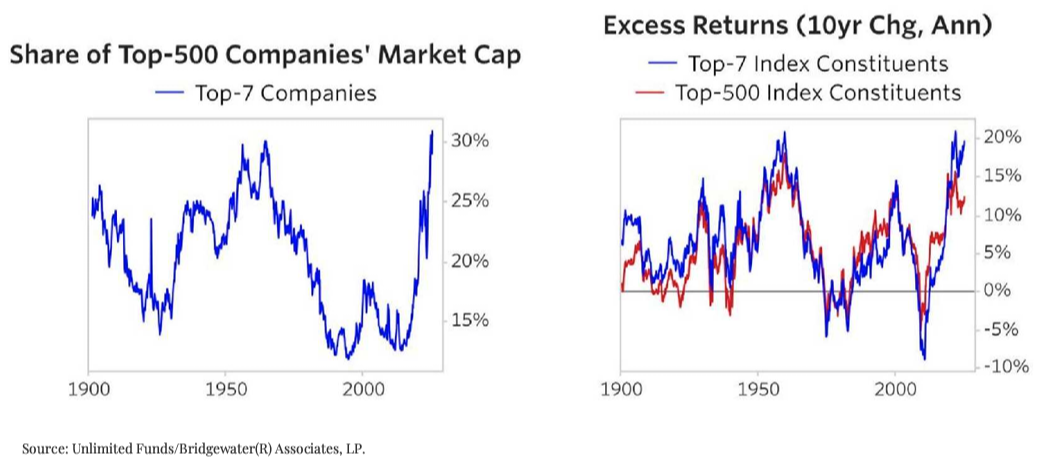
The current period of U.S. market concentration can largely be attributed to significant technological advancements.
The rapid evolution of technology has allowed leading companies, particularly in the tech sector, to establish and maintain dominance. Innovations in areas such as artificial intelligence, cloud computing, and digital services have played a crucial role in solidifying their positions.
Shifts in consumer behavior have also contributed to this concentration. As preferences have increasingly leaned towards online shopping, streaming services, and digital communication, companies like Amazon, Netflix, and Meta have experienced substantial growth in market share. This change in consumer habits has further bolstered the influence of these leading firms.
Additionally, many of the top companies benefit from network effects, which enhance their value as more users engage with their services. This creates a significant barrier to entry for potential competitors, making it difficult for new players to gain traction in the market.
Lastly, increased investment in these dominant firms has fueled their growth and market power. Investor confidence in their potential has led to a notable influx of capital, while strategic mergers and acquisitions have enabled these companies to expand their reach and consolidate their market positions. Together, these factors have significantly contributed to the heightened concentration observed in the U.S. market today.
Given the elevated concentration, investors may want to consider adopting an equally weighted approach.